If you've read the prescribing information for a weekly GLP-1 medicine, you've met the dose ladder: a starting dose, then a series of higher doses the label describes as steps, with a minimum time on each. People call it titration, escalation, or just "going up a dose".
The ladder is one of the most searched things about these medicines, and one of the most misunderstood. This guide explains how to read it, where you sit on it, and, just as importantly, what it doesn't tell you.
What the ladder is
Every weekly GLP-1 injection label sets out the doses the medicine comes in and how treatment usually starts. In broad terms, each label describes:
- A starting dose, which the label usually explains is for getting started rather than a long-term dose
- The higher doses above it, in order, up to the highest dose the label covers
- How long at least the label says to stay on a dose before a step up is considered
The exact doses and timings differ between medicines, and sometimes between countries. The US, UK and Australian labels don't always match, which is why Hushweek follows the label for your medicine in your country.
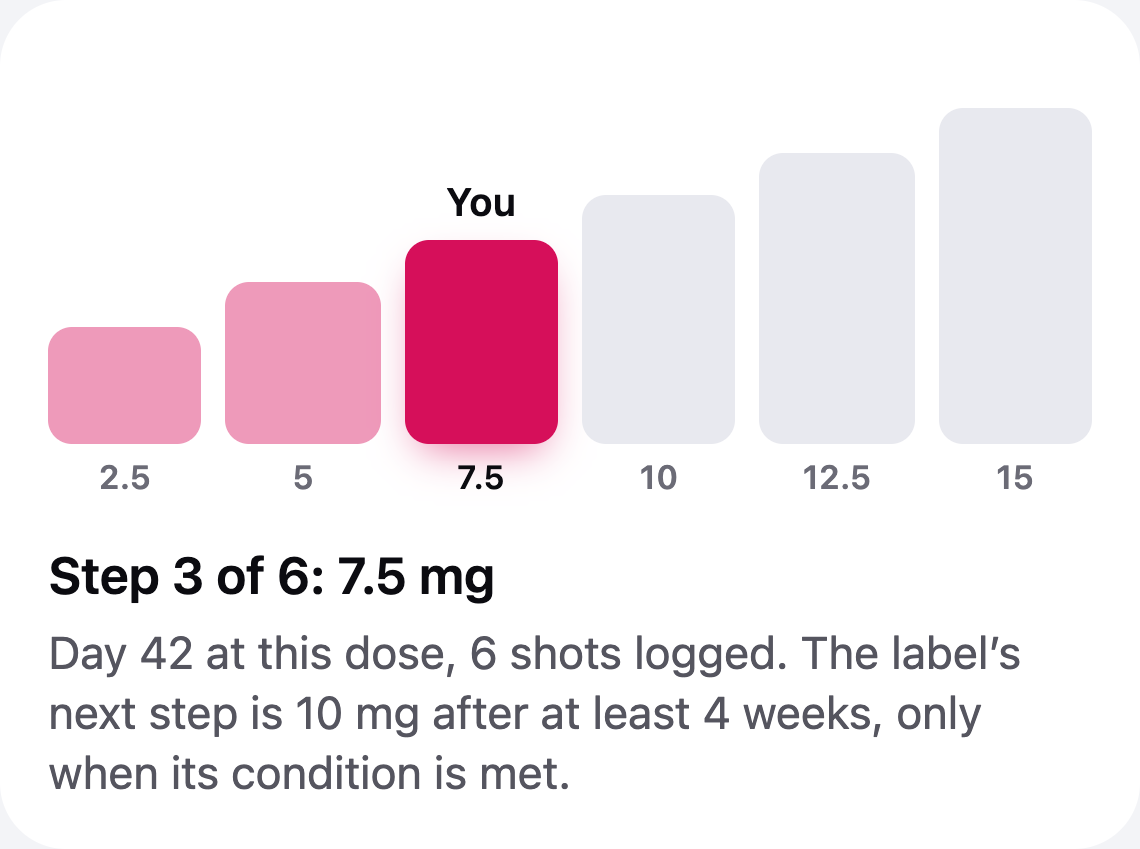
Step 2 of 6: 5 mg The label’s next step is 7.5 mg after at least 4 weeks, only when its condition is met.
Reading where you are
Knowing your step is genuinely useful. It helps you follow what your prescriber is saying, and it makes your injection log easier to read later. A few things to keep in mind:
- Your step is set by your prescription, not by the calendar. The label gives a minimum time at a dose; your prescriber decides whether and when you move.
- Staying on a step is normal. Many people stay on a dose longer than the minimum, or stay on a lower dose for good. The ladder lists what's possible, not a schedule you have to complete.
- Going back down a step can happen too. Again, that's a decision for you and your prescriber.
- The top step isn't a goal. It's simply the highest dose the label covers.
The ladder shows what the label allows. Your prescription says where you are.
What the ladder doesn't tell you
This is the part most apps and forums get wrong. The ladder is not:
- A countdown. Reaching the minimum time on a step doesn't mean you should move up.
- A comparison. Someone else's step says nothing about what yours should be.
- Advice about missed doses or restarting. Labels cover those situations separately, with their own instructions. Our guide to finding your label's missed-dose rule explains where to look.
- Something an app should decide. No tracker, including Hushweek, should ever tell you to change your dose.
Logging a dose change
When your prescriber changes your dose, log it on the day it happens, exactly as written on your new prescription. A clear record of each change, with its date, makes everything else in your log easier to understand: weight charts, side effect check-ins, even your pen supply. Hushweek marks each change on your charts so you can see what happened around it. In Hushweek, a new dose goes in You › Medicine and schedule › Dose, from the day it starts, and a single dose logged by mistake can be corrected from History.
If you use a custom or compounded dose, log it exactly as written, in mg, mL or units, with no conversion. A tracker should keep your dose as your prescriber wrote it, not do arithmetic on it.
How Hushweek shows the ladder
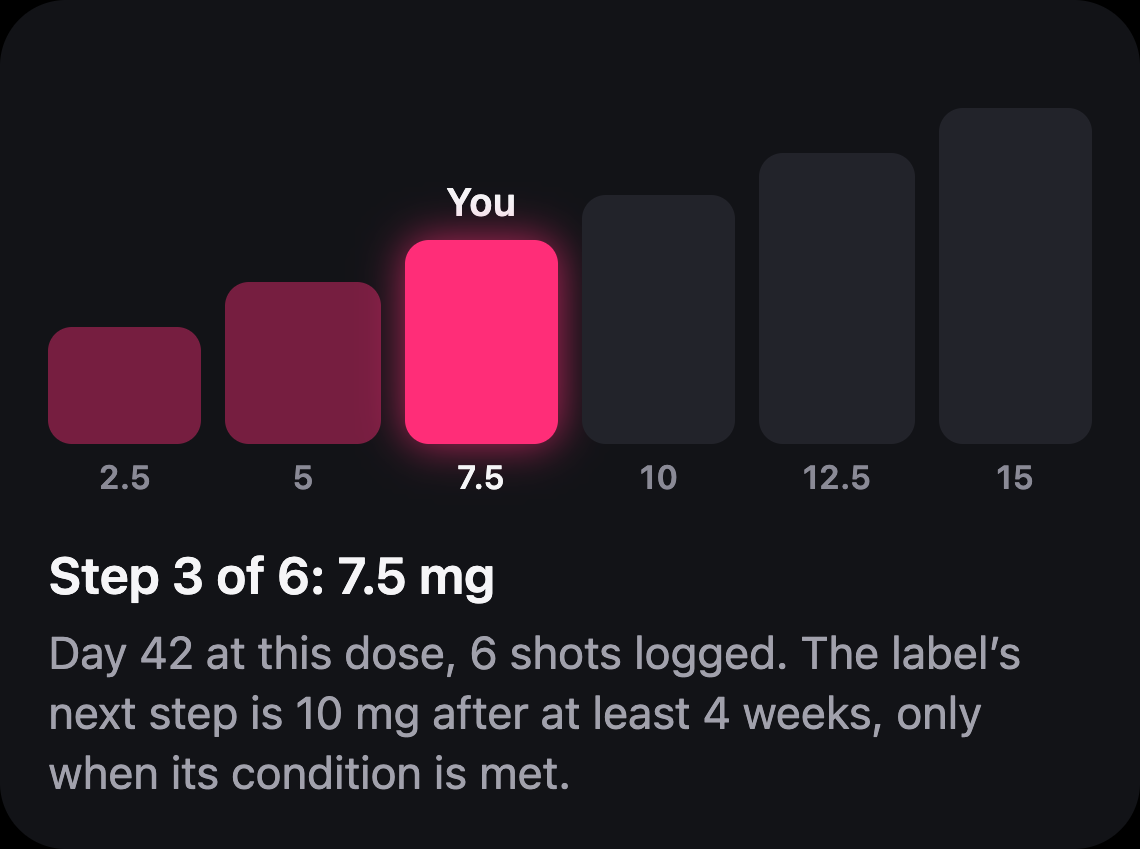
Hushweek shows the ladder from your medicine's label, with the step you're on filled in and the next step the label lists. Every screen like this carries the same line: “Follow your prescriber’s plan. This app explains the label; it is not medical advice and not a medical device.” There's a link to the label beside it, so you can always check the source.
Questions people ask
What is a GLP-1 dose ladder?
It's the set of doses a medicine's label describes, from the starting dose up through higher steps, with the minimum time the label gives at each dose before a step up is considered.
Do I have to move up the ladder?
No. The ladder lists what the label covers. Whether you move, stay or go down is a decision for you and your prescriber.
Why does my dose schedule differ from someone else's?
Prescribers tailor doses to the person, and labels can differ between medicines and countries. Comparing steps with other people doesn't tell you much about your own.
Can Hushweek tell me when to increase my dose?
No. Hushweek shows where you are on your label's ladder and links the label. It never recommends a dose; your prescriber decides.
Keep your week in one quiet place.
Doses, sites, weight, side effects and food in a free app that follows your medicine’s own label. No account needed.
Get Hushweek